Testing the gap between a beautiful pin and a believable storefront.
Framed and ran a synthetic research study using my live Shopify collection and Pinterest creatives. Translated the output into commerce UX hypotheses and constructive feedback on the research workflow.
Start with a real decision
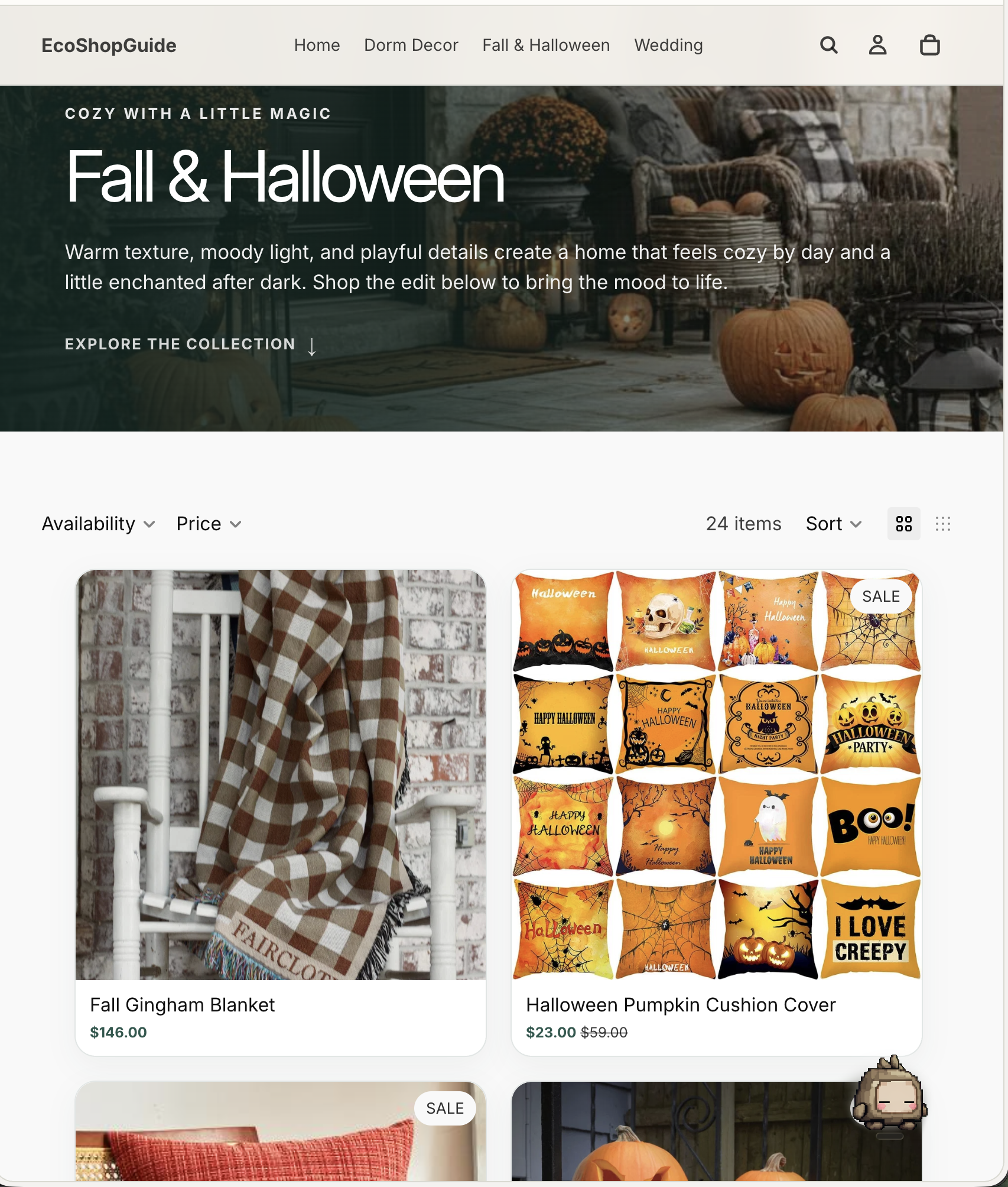
Pinterest visitors saw styled seasonal rooms, then landed on my Shopify collection of individual products. I wanted to understand what might prevent a purchase and whether the landing experience fulfilled the promise of the creative. I supplied the live collection and real Pinterest creative context, and kept the question about barriers open-ended.
Two separate synthetic studies
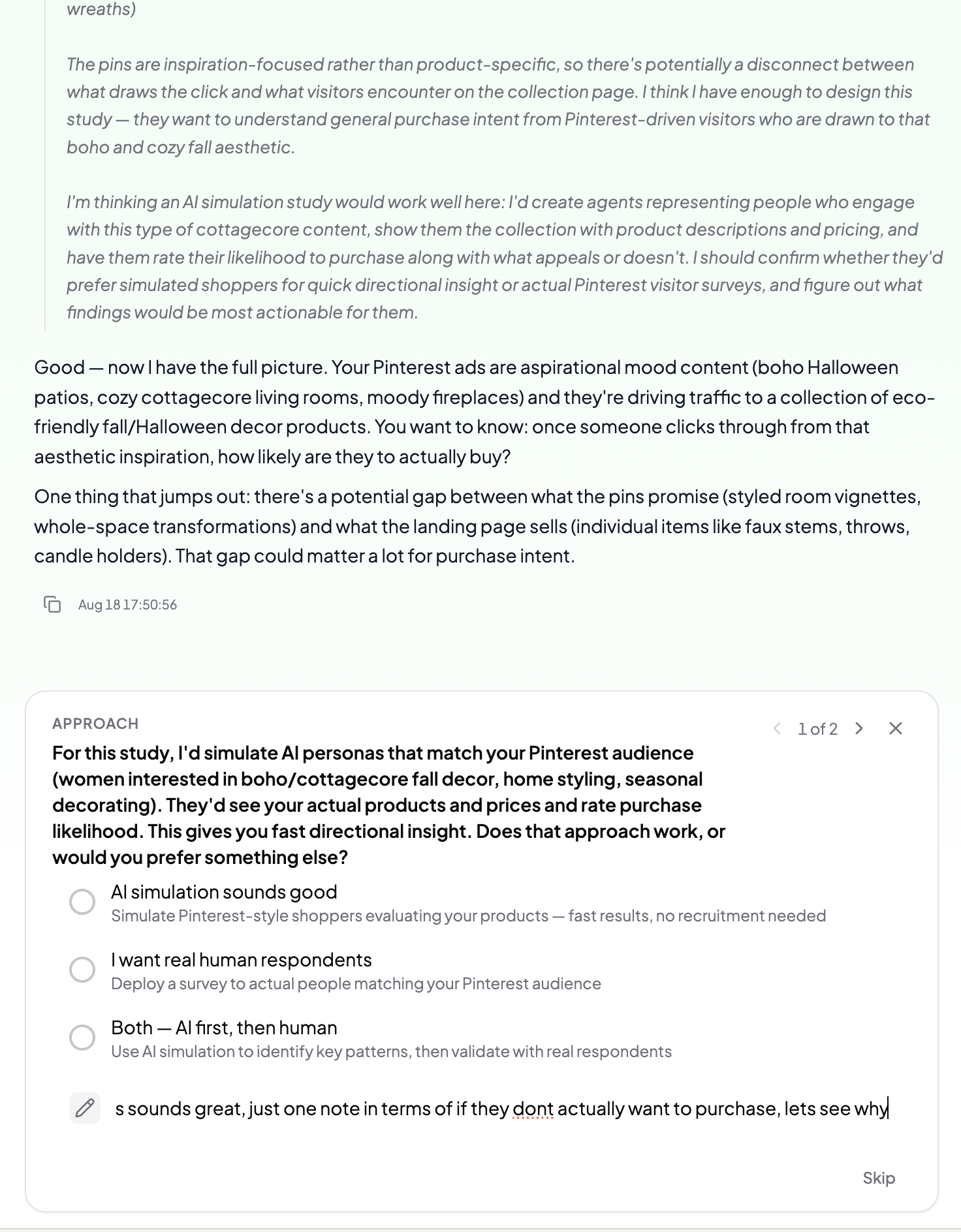
The initial purchase-intent study used 15 simulated shoppers across five segments. Expected Parrot generated the personas, responses and report. A separate brand study compared EcoShopGuide and Bambana using 18 AI personas and nine questions, holding the presented store context constant. Neither study recruited human respondents.
Findings became hypotheses
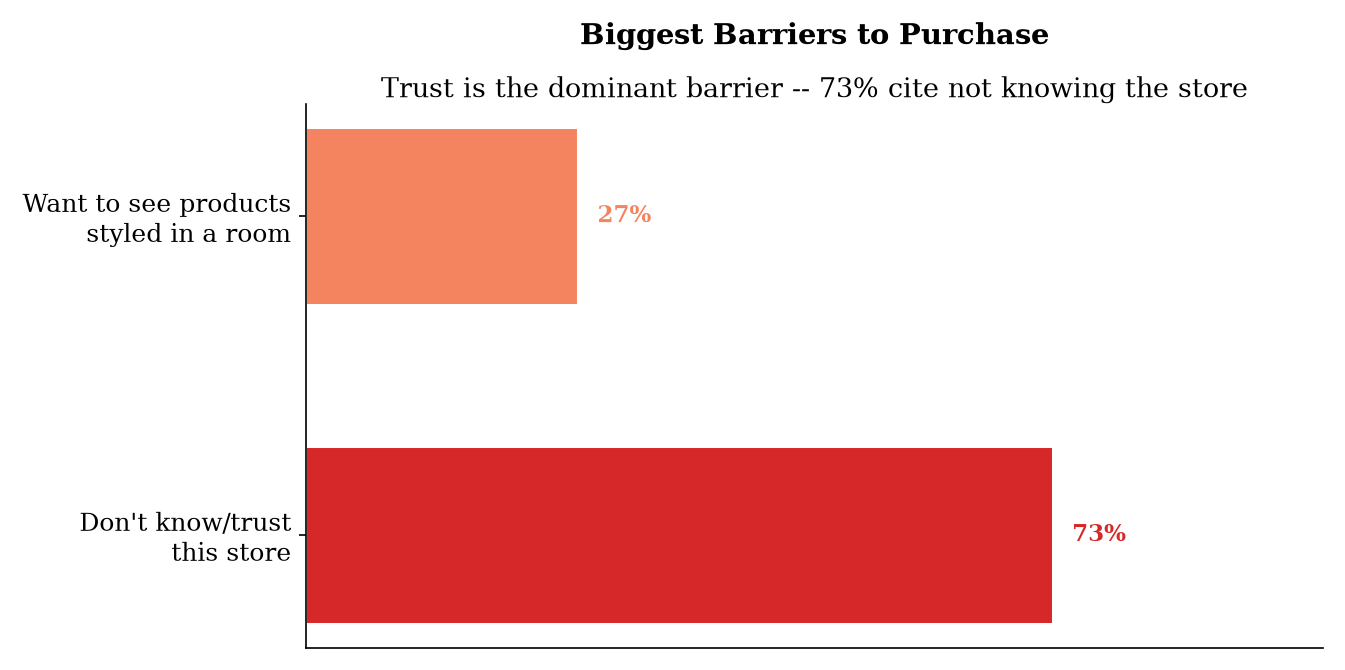
The output suggested tests around clearer trust information, shoppable collections that match the clicked creative, and product context. In the separate naming simulation, all 18 personas preferred Bambana for click-through and aesthetic fit. That supports testing a branding hypothesis, not claiming increased click-through or sales.
My product feedback
The study setup usefully asked about the decision and audience before locking the plan. I suggested clearer credit-cost expectations and a way to interview a simulated respondent after the report, so a researcher could probe contradictions without rebuilding the study.
Contribution and limits
I framed the business question, supplied context, reviewed the output and developed next-step hypotheses. Expected Parrot provided credits in compensation. I did not design its product UI. Simulated intent is not behavioral validation, and no conversion lift is claimed.